In today’s fast-moving digital economy, businesses need more than generic tools to stay competitive. Every organisation operates with unique workflows, customer journeys, and operational challenges. This is where custom software development becomes a strategic advantage.
Instead of adapting business processes to fit ready-made software, custom solutions are built to align perfectly with how a company works. The result is better efficiency, improved scalability, stronger security, and a digital system designed for long-term growth.
What Is Custom Software Development?
Custom software development is the process of designing and building applications specifically tailored to a business’s requirements. Unlike off-the-shelf tools, custom software is created from the ground up to solve defined problems, integrate with existing systems, and support specific operational goals.
These solutions can include:
- Web applications
- Mobile apps
- Enterprise platforms
- CRM and ERP systems
- Workflow automation tools
- Customer portals
Each solution is engineered to match exact business needs rather than forcing organisations to adjust to pre-built limitations.
Why Custom Software Is Important for Modern Businesses
Most businesses today rely on multiple digital tools. However, disconnected systems often create inefficiencies, manual errors, and data silos. Custom software solves this by bringing everything into a unified, intelligent ecosystem.
A well-developed system ensures that:
- Workflows become automated and structured
- Teams collaborate using a single platform
- Data flows seamlessly across departments
- Decision-making becomes faster and more accurate
This makes custom software a long-term digital asset rather than just a tool.
Key Benefits of Custom Software Development
1. Built Around Business Needs
Every feature is designed based on real operational requirements. This ensures better usability and removes unnecessary complexity often found in standard software.
2. Scalability for Future Growth
As businesses expand, their systems must evolve. Custom software allows new modules, features, and integrations to be added without replacing the entire system.
3. Improved Operational Efficiency
Automation of repetitive tasks reduces manual workload and allows teams to focus on strategic activities. This increases productivity across departments.
4. Enhanced Data Control
Custom systems centralise business data, making it easier to track performance, generate insights, and make informed decisions in real time.
5. Strong Security Framework
Security protocols can be designed specifically for the organisation, including role-based access, encryption, and compliance requirements.
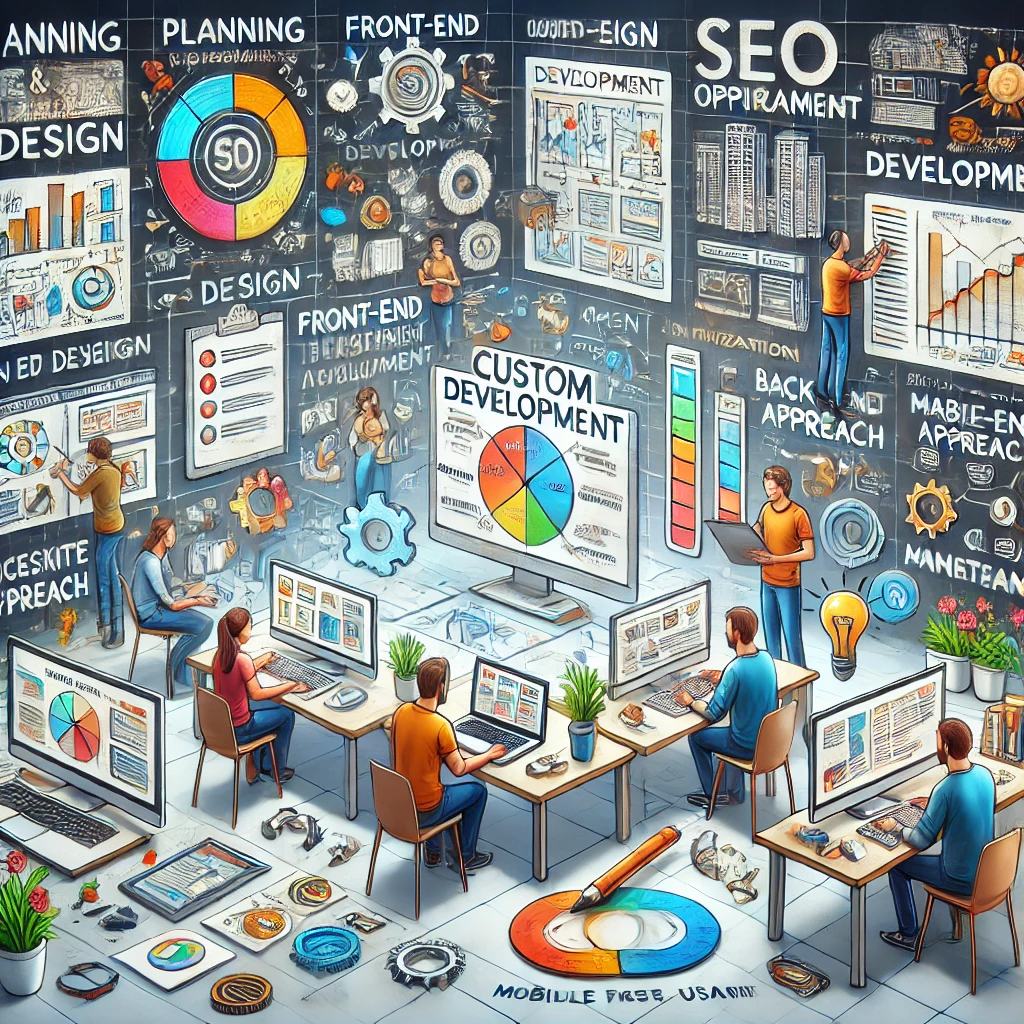
Custom Software Development Process
A structured development process ensures that the final product is reliable, scalable, and aligned with business goals.
Requirement Analysis
The process begins with understanding business challenges, user expectations, and operational workflows. This stage defines the foundation of the entire system.
System Design and Planning
Developers create architecture models, UI/UX layouts, and technical frameworks that define how the system will function and scale.
Development Phase
The software is built in stages using agile methods, allowing continuous improvement and stakeholder feedback throughout the process.
Testing and Quality Assurance
Each component is tested for performance, security, usability, and integration to ensure stability and reliability.
Deployment and Support
Once approved, the system is deployed and supported with maintenance, updates, and enhancements for long-term performance.
Technologies Used in Custom Software Development
Modern custom software development uses advanced technologies to deliver powerful and scalable solutions:
- Front-end frameworks for responsive interfaces
- Back-end technologies for secure processing
- Cloud infrastructure for scalability and performance
- APIs for third-party integrations
- Databases for structured and secure data storage
Emerging technologies like AI, automation, and analytics are also integrated where needed to enhance efficiency and decision-making.
Business Automation Through Custom Software
One of the strongest advantages of custom solutions is automation. Businesses can eliminate repetitive manual tasks and streamline operations.
Examples include:
- Automated customer onboarding
- Lead tracking and CRM updates
- Invoice generation and reporting
- Workflow approvals and notifications
- Inventory and order management
This improves speed, reduces errors, and enhances overall productivity.
Industries That Benefit Most from Custom Software
Custom software is widely used across industries where standard solutions are not enough:
- Real estate and property management
- Healthcare systems
- Logistics and supply chain
- Retail and e-commerce
- Education and e-learning
- Finance and banking
- Manufacturing and operations
Each industry benefits from tailored workflows and data-driven systems designed for its specific requirements.
Security and Reliability in Custom Software
Security is a core part of development, not an afterthought. Custom systems are built with:
- Secure authentication systems
- Role-based access control
- Data encryption standards
- Regular vulnerability testing
- Backup and disaster recovery systems
This ensures business data remains protected at all times.
Custom Software vs Off-the-Shelf Solutions
Off-the-shelf software provides general features for a wide audience, but it often lacks flexibility. Businesses may end up paying for unnecessary features or struggling with missing functionality.
Custom software, on the other hand:
- Fits exact business processes
- Integrates with existing systems
- Eliminates unnecessary features
- Scales with business growth
- Offers full ownership and control
This makes it a more strategic long-term investment.
Choosing the Right Development Partner
Selecting the right development company is critical for project success. A reliable partner should understand business goals, offer technical expertise, and provide long-term support.
Key qualities to look for include:
- Strong technical experience
- Industry understanding
- Transparent communication
- Agile development approach
- Post-launch maintenance support
A strategic partner ensures the software delivers measurable business value.
Why Choose Delemon Technology for Custom Software Development?
At Delemon Technology, we build intelligent and scalable digital solutions designed to solve real business challenges. Our approach focuses on understanding business logic first, then translating it into efficient and high-performing software systems.
We specialise in creating:
- Business automation platforms
- Web and mobile applications
- Enterprise-grade systems
- Integrated digital ecosystems
Our goal is to deliver software that not only functions effectively but also drives long-term business transformation.
Future of Custom Software Development
The future of custom software development is driven by automation, AI integration, cloud computing, and data intelligence. Businesses are moving toward systems that are adaptive, predictive, and fully connected.
Future-ready software will:
- Automate decision-making processes
- Provide real-time analytics
- Improve customer personalization
- Enable seamless system integration
- Support remote and hybrid operations
Companies that invest in custom solutions today will be better prepared for future digital transformation.
Conclusion
Custom software development is no longer a luxury—it is a necessity for businesses aiming to scale efficiently and stay competitive. By building tailored digital solutions, organisations gain better control, improved productivity, stronger security, and long-term scalability.
With the right development partner, custom software becomes a powerful foundation for innovation and sustainable business growth.




Leave a Comment
Share your thoughts on this article