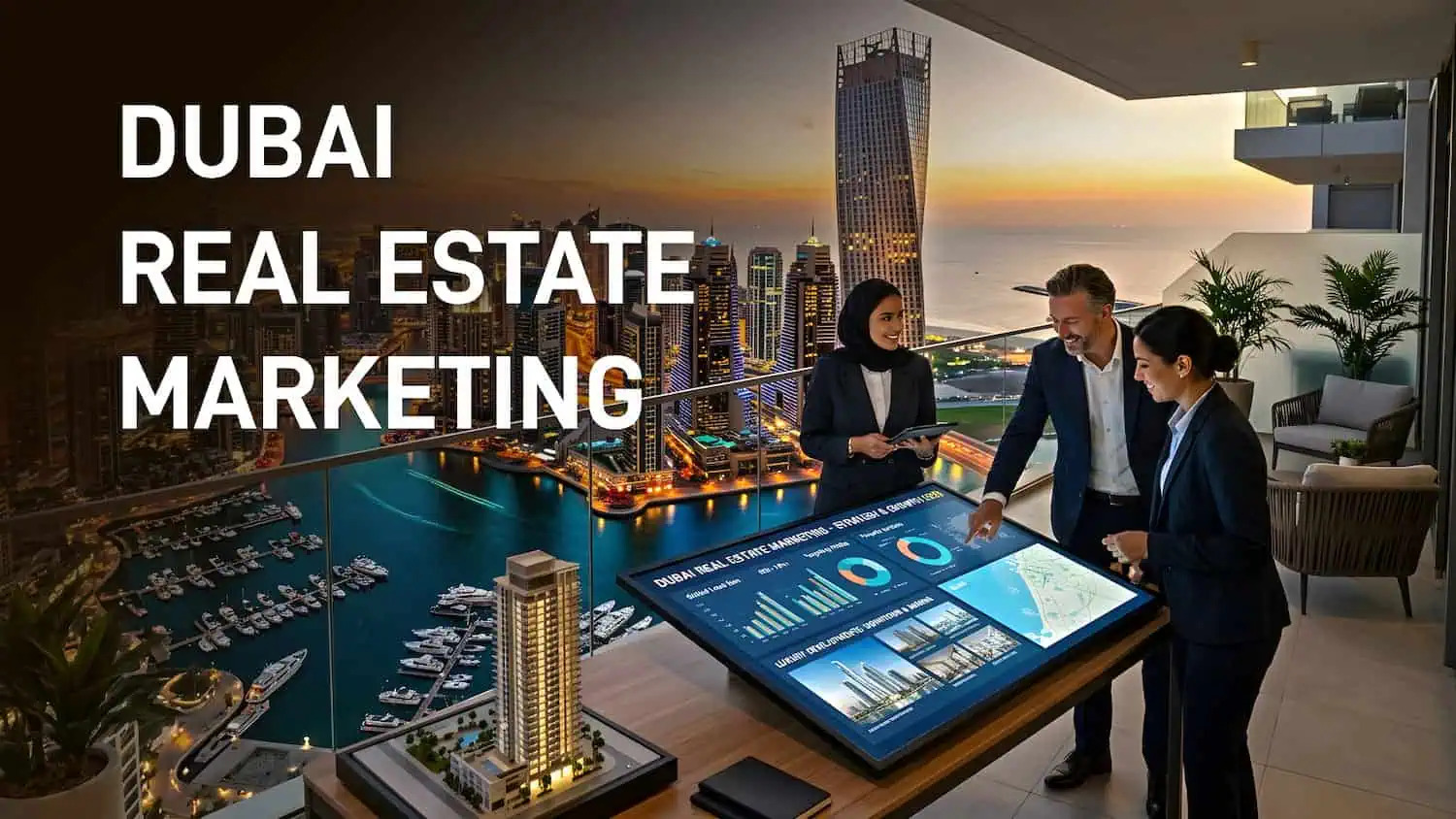
Dubai’s property market is competitive, international, and digitally driven. Buyers, tenants, landlords, and investors now begin most property searches online, making digital visibility essential for an agency, developer, and consultant. A strong strategy for digital marketing for real estate Dubai helps businesses reach qualified audiences, present properties professionally, build trust, and convert online interest into enquiries.
Why Digital Marketing Matters in Dubai Real Estate
Dubai attracts residents, international investors, first-time buyers, entrepreneurs, and high-net-worth individuals. Each audience has different priorities. Some focus on rental income and capital growth, while end users may care more about schools, transport, lifestyle, and community facilities.
Digital marketing makes it possible to reach each segment with relevant messages. Businesses can target users according to location, property type, buyer intent, preferred community, and stage of the buying journey.
It also supports the complete customer journey. A buyer may discover a project on social media, search for it on Google, visit a landing page, download a brochure, and finally contact an agent.
Search Engine Optimisation for Property Websites
Search engine optimisation helps property websites appear when users search for apartments, villas, townhouses, off-plan projects, developers, and investment opportunities in Dubai. Search users often have clear intent, making SEO an important source of relevant traffic.
A professional real estate SEO company Dubai should focus on keyword research, technical SEO, local visibility, content quality, internal linking, and website authority. Property pages must be built around specific search needs instead of relying on general descriptions.
Useful SEO content includes community guides, developer pages, property category pages, buying guides, and market reports. A page about Dubai Marina apartments, for example, should explain lifestyle, connectivity, property options, and buyer appeal.
Technical performance also matters. Websites should load quickly, work smoothly on mobile devices, use clean URLs, include structured data, and provide clear enquiry options.
Paid Advertising for Immediate Visibility
Paid advertising is useful for new launches, ready properties, exclusive listings, and investment campaigns. Google Ads can capture users actively searching for property, while Meta platforms can build awareness through visual and video campaigns.
A real estate advertising agency Dubai should divide campaigns according to buyer intent. Someone looking for a ready villa should not receive the same message as an overseas investor considering an off-plan apartment.
Campaigns can be organised by property type, location, developer, completion status, investment objective, and target market. Every advertisement should lead to a focused landing page that matches the user’s interest.
An ad promoting waterfront apartments should open a page that highlights project details, amenities, location benefits, and a simple enquiry form. Sending every visitor to a general homepage often reduces conversion quality.
Social Media Marketing for Real Estate
Instagram, Facebook, LinkedIn, TikTok, and YouTube allow property businesses to present projects through walkthroughs, short videos, community tours, construction updates, and agent insights.
Effective real estate social media marketing Dubai should combine promotional and educational content. A page filled only with listings can become repetitive. Buyers also want market guidance, neighbourhood comparisons, investment explanations, and answers to common questions.
Strong formats include property tours, launch announcements, client stories, agent-led advice, construction progress, and short investment tips. Video is especially valuable because it helps viewers understand layouts, interiors, views, amenities, and surrounding areas.
Building a High-Converting Real Estate Website
A website is the central platform for digital campaigns. SEO, social media, email, and paid advertising should direct users towards pages that provide useful information and encourage action.
A strong property website should offer clear navigation, fast loading, mobile responsiveness, search filters, and simple contact options. Visitors should be able to browse by community, property type, bedrooms, and completion status.
Each property page should include images, videos, floor plans, location details, amenities, developer information, handover status, and investment highlights.
Trust signals are equally important. Company credentials, team profiles, testimonials, office details, and verified contact information reduce hesitation, particularly for international buyers purchasing remotely.
Content Marketing That Builds Authority
Content marketing supports SEO, social media, and lead nurturing. Informative blogs, guides, reports, and videos answer buyer questions before a sales conversation begins.
A useful content plan should reflect real search behaviour and common questions received by agents. Strong topics include the best communities for families, ready versus off-plan property, freehold ownership, buying procedures, rental demand, infrastructure development, and common investor mistakes.
Consistent content helps a company demonstrate expertise and gives sales teams useful material to share during follow-up.
Lead Generation and Marketing Automation
Generating an enquiry is only the beginning. Property businesses also need a system for qualifying, organising, and following up with leads.
An effective property lead generation Dubai strategy should connect website forms, landing pages, CRM software, WhatsApp, email, and advertising platforms. This helps teams respond quickly and understand where each lead came from.
Automation can send confirmations, share brochures, assign leads to agents, segment prospects by preference, schedule follow-ups, and re-engage inactive contacts.
Fast response matters because buyers often contact several agencies. Automated alerts and clear lead ownership help agents respond while interest is still strong.
Measuring Digital Marketing Performance
Every campaign should be supported by accurate tracking. Important metrics include website traffic, keyword rankings, landing-page conversion rate, cost per lead, qualified lead rate, response time, viewing bookings, and source of closed transactions.
Businesses should look beyond enquiry volume. A campaign producing fewer but highly qualified prospects may create more value than one generating many low-intent contacts.
Regular reporting can reveal the best-performing locations, property types, audience groups, advertisements, and content formats.
Common Real Estate Marketing Mistakes
Many property companies lose opportunities because their marketing activities are disconnected. Common mistakes include running ads without dedicated landing pages, publishing duplicate content, delaying follow-up, ignoring mobile performance, and measuring success only by lead volume.
Another mistake is using the same message for investors, tenants, landlords, and end users. Each group has different needs, so campaigns should reflect those differences.
Sustainable results require regular content, campaign testing, SEO improvements, and continuous lead follow-up.
How Delemon Technology Supports Real Estate Growth
Delemon Technology helps property businesses build connected digital strategies focused on visibility, engagement, and qualified lead generation. Its services include website development, SEO, paid advertising, social media marketing, content creation, branding, and automation.
The goal is not simply to increase online activity. It is to attract the right audience, improve enquiry quality, present projects professionally, and support sales teams with efficient digital systems.
By aligning campaigns with buyer intent and business objectives, Delemon Technology helps agencies, developers, and consultants establish a stronger presence in Dubai’s competitive property market.
Conclusion
A successful strategy for digital marketing for real estate Dubai requires more than isolated advertisements or property posts. It depends on a connected system combining search visibility, paid campaigns, social media, content, websites, automation, branding, and analytics.





Leave a Comment
Share your thoughts on this article