
Web application development has evolved into a core pillar of digital transformation for modern businesses. Organizations today rely on browser-based applications to manage operations, serve customers, automate workflows, and deliver real-time data access across devices.
Unlike traditional desktop software, web applications are platform-independent, instantly accessible, and continuously upgradable. This makes them essential for businesses aiming to scale efficiently in a competitive digital environment.
At Delemon Technology, web application development is approached as a strategic engineering process that blends business logic, user experience, and scalable architecture to build long-term digital solutions.
Understanding Web Application Development
Web application development is the process of creating software applications that run on web servers and are accessed through browsers. It involves both client-side and server-side engineering, supported by databases, APIs, and cloud infrastructure.
A modern web application typically includes:
- Interactive user interface (frontend)
- Business logic processing (backend)
- Data storage and management systems
- API integrations with external platforms
- Security and authentication layers
These components work together to deliver seamless functionality, ensuring users can perform tasks efficiently without installing software locally.
Why Businesses Rely on Web Applications Today
Digital-first businesses require systems that are fast, scalable, and accessible from anywhere. Web applications provide this flexibility while supporting complex operations.
Key advantages include:
- Centralized data access across departments
- Real-time updates and collaboration
- Reduced operational inefficiencies
- Device-independent accessibility
- Easier deployment and maintenance
From startups to large enterprises, web applications are now essential tools for improving productivity and customer engagement.
Custom Web Application Development for Business-Specific Needs
Off-the-shelf software often fails to match unique business workflows. This is where custom web application development becomes critical.
A custom-built application is designed around specific operational needs, allowing businesses to define exactly how the system should function.
Common use cases include:
- Customer relationship management systems
- Enterprise dashboards and analytics tools
- E-commerce and marketplace platforms
- Booking and reservation systems
- Workflow automation tools
Custom solutions ensure full control over features, scalability, and integration capabilities, making them ideal for long-term digital growth.
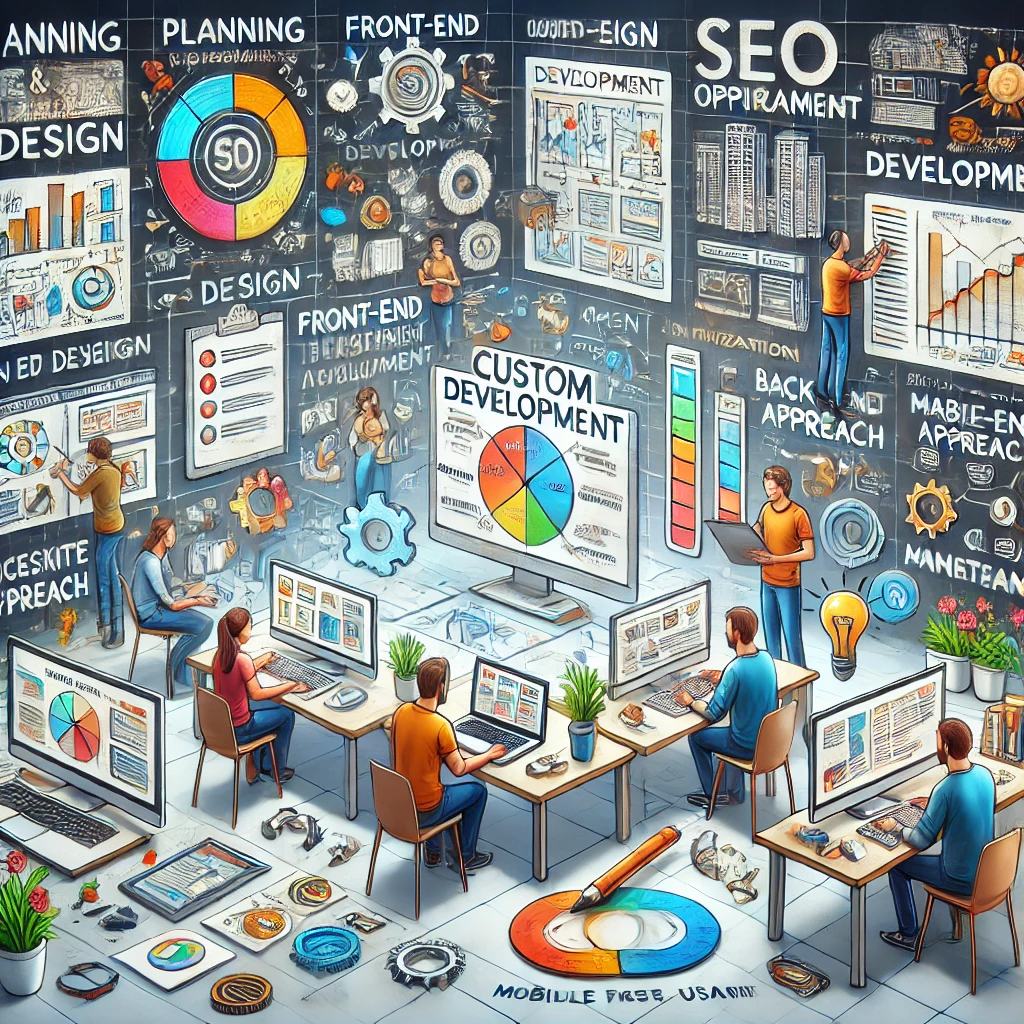
End-to-End Web Application Development Lifecycle
A successful application is built through a structured development lifecycle that ensures quality, performance, and scalability.
1. Requirement Engineering and System Planning
This phase defines business objectives, technical requirements, user expectations, and functional scope. It ensures the application is aligned with measurable goals before development begins.
Clear documentation at this stage reduces risks and improves execution accuracy.
2. UI/UX Architecture and Design Strategy
User experience design focuses on usability, navigation flow, and interaction efficiency. Wireframes and prototypes are created to visualize how users will interact with the system.
Responsive design ensures consistent performance across desktops, tablets, and mobile devices.
A well-designed interface increases engagement and reduces user friction.
3. Frontend Development (Client-Side Engineering)
Frontend development transforms design into interactive interfaces using technologies such as:
- HTML5, CSS3, JavaScript
- React.js / Angular / Vue.js
This layer ensures smooth navigation, fast loading performance, and responsive interactions.
4. Backend Development (Server-Side Architecture)
The backend powers the logic behind the application. It handles:
- Authentication and authorization
- Data processing
- Business logic execution
- Server communication
- API handling
Common technologies include Node.js, Python (Django/Flask), PHP (Laravel), and Java-based frameworks.
5. Database Design and Data Management
A strong database structure ensures efficient data storage and retrieval. Depending on the application, SQL or NoSQL databases are used.
Proper indexing, normalization, and optimization improve performance and scalability.
6. API Integration and System Connectivity
Modern applications rely heavily on integrations. APIs enable communication with:
- Payment gateways
- CRM systems
- Cloud services
- Third-party analytics tools
- External business platforms
This creates a connected digital ecosystem that enhances functionality.
7. Quality Assurance and Testing
Testing ensures the application is stable, secure, and user-ready.
It includes:
- Functional testing
- Performance testing
- Security testing
- Cross-browser compatibility testing
- Load testing
A rigorous QA process eliminates bugs and ensures consistent performance.
8. Deployment and Continuous Maintenance
After testing, the application is deployed on cloud or server infrastructure. However, development does not end here.
Ongoing maintenance includes:
- Security updates
- Feature enhancements
- Performance optimization
- Bug fixes
- System scaling
This ensures long-term reliability and efficiency.
Scalable Web Application Architecture
Scalability is a critical factor in modern web application development. Applications must handle increasing users, data volume, and functionality without performance degradation.
Scalable systems use:
- Modular architecture
- Cloud-based infrastructure
- Load balancing
- Microservices (in advanced systems)
- Optimized database design
A scalable foundation ensures the application grows alongside the business.
Security in Web Application Development
Security is a non-negotiable aspect of any web-based system. Applications often handle sensitive data such as user credentials, financial records, and business information.
Key security practices include:
- Secure authentication systems
- Role-based access control
- Data encryption (in transit and at rest)
- Input validation and sanitization
- Regular vulnerability testing
Strong security builds trust and protects business integrity.
Enterprise Web Application Development Solutions
Enterprise-level applications are designed for large-scale operations with complex workflows.
They typically include:
- Multi-user access systems
- Department-level permissions
- Advanced reporting dashboards
- Workflow automation engines
- Integration with internal enterprise systems
Enterprise web application development improves operational efficiency and decision-making across organizations.
Responsive Web Application Development
With users accessing platforms from multiple devices, responsive design is essential.
Responsive web applications automatically adjust layouts based on screen size, ensuring usability across:
- Mobile phones
- Tablets
- Desktop systems
This improves accessibility, engagement, and user satisfaction.
Performance Optimization for Web Applications
Performance directly affects user retention and conversion rates. Even a few seconds of delay can impact engagement.
Optimization strategies include:
- Code minification
- Caching mechanisms
- Lazy loading techniques
- Database query optimization
- CDN integration
A high-performance application delivers smooth and reliable user experiences.
Business Benefits of Web Application Development
A professionally developed web application provides long-term business advantages:
- Improved operational efficiency
- Centralized system management
- Better customer experience
- Increased automation
- Data-driven decision-making
It also enables businesses to innovate faster and respond quickly to market demands.
Why Choose Delemon Technology for Web Application Development
Delemon Technology delivers end-to-end web application development services focused on performance, scalability, and usability.
The development approach emphasizes:
- Business-driven architecture
- Clean and scalable coding practices
- Modern technology stacks
- Secure system design
- Long-term maintainability
Every solution is engineered to support business growth, improve efficiency, and enhance digital transformation.
Conclusion
Web application development is no longer just a technical requirement—it is a strategic business investment. Well-designed applications streamline operations, improve user experience, and create scalable digital ecosystems.
From custom enterprise systems to responsive customer platforms, the right development approach ensures long-term success in a competitive digital landscape.
With Delemon Technology, businesses gain access to structured development expertise that transforms ideas into powerful, secure, and scalable web applications built for the future.




Leave a Comment
Share your thoughts on this article